
The deadline type with no final deadline, counted
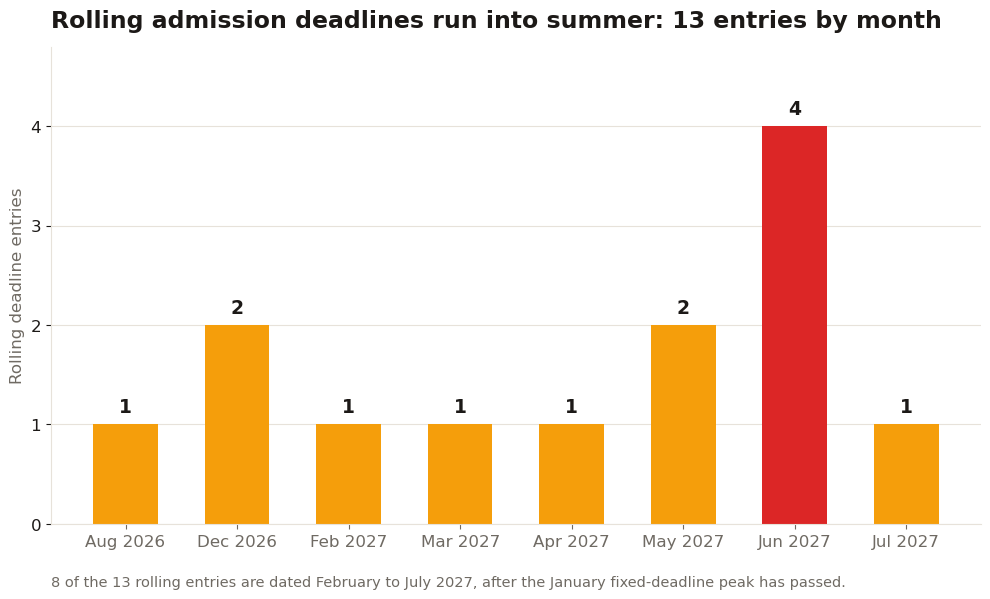
Only 13 of the 199 recorded deadline entries are rolling. Against 78 regular, final and general deadlines, rolling is the exception in the data, not a parallel system. A late start strategy built only on rolling schools is built on a narrow base.
The runway is real, though: 8 of the 13 rolling entries are dated February to July 2027. June alone carries 4, the largest rolling cluster in any month. While the fixed deadline world peaks in January and goes quiet, rolling windows are still formally open into the summer.
There is a second, quieter second chance in the data. 29 of the 127 programs carry more than one deadline: a priority date and a final date, an early round and a regular round, a spring intake after the fall one. Missing a program's first date is not always missing the program. The other 98 programs carry exactly one deadline each, and for those, the date is the date.
The rolling list, with the catch attached
Universities with rolling admissions review applications as they arrive. Missed December? Start here:
Purdue University (West Lafayette). A large research university where early rolling applicants take the popular majors first.
University of Pittsburgh. Rolling with strong health science demand; earlier files see more scholarship funds.
Penn State (University Park). Rolling in practice, but priority dates govern the flagship campus and capped programs.

Rutgers (New Brunswick). Reviews as files complete, which makes document speed part of the strategy.
University of Minnesota (Twin Cities). A long window, with priority dates deciding scholarship consideration.
Indiana University Bloomington. Rolling decisions with earlier applicants favored for direct admission to competitive schools.
Michigan State. Priority deadline February 1; yes, it is rolling, but treat February 1 as the real deadline.
Arizona State University. One of the longest genuine windows on the list.
SUNY Binghamton and SUNY Buffalo. Rolling review with spring entry points some late starters miss entirely.
The catch is consistent across all of them: earlier is still better. Scholarship funds and popular programs fill up as the window runs. Michigan State's February 1 priority date is the model for how most of these schools actually work: apply by it for full consideration, after it for leftovers. Our 2027 deadline guide maps the fixed dates these schools sit alongside, and DocCheck keeps rolling and fixed deadlines in one checklist per program, labeled by type, so a rolling window never disguises itself as unlimited time. ApplyCheck does the same in tracker form with push alerts, so the second chance does not become a second miss.
Rolling admission universities review files as they arrive, so applying early is a real advantage, not just advice. Use the summer runway the chart shows if you genuinely need it. Just walk into it knowing it is 13 entries wide, not 199, and shrinking a little more with every week you wait.
Before you rebuild your whole list around rolling schools, run the multi deadline check on the programs you already have. Twenty nine of the 127 documented programs carry a second date of some kind, and a spring intake or a final deadline behind the priority date you missed can keep a first choice school alive without changing your list at all. That check takes an afternoon: open each program, note every date it records, and sort what is still ahead of you. Only then does the rolling list above become the plan, entered with open eyes. Late starters who do the audit first routinely find they have lost less than they feared, because the admissions calendar is wider, stranger and more forgiving than its January reputation suggests.
Sources: Common App